Table of Contents:
Wondering what actually counts as a shed and if you really need one? If your garage is packed and you keep wishing for a little building out back, this will help you see what a shed can do for you.
What Is Considered a Shed?
A shed is a small building in the yard used for storage or projects. It’s a simple roofed structure that protects your stuff from rain, snow, and sun and sits apart from the main house. For most families, a shed is the extra room the garage and basement wish they had.
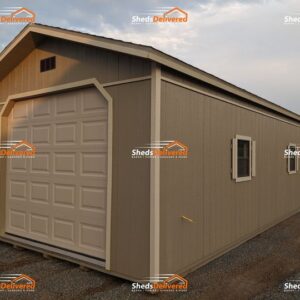
There are three main shed sizes: small sheds around 6 x 8 or 8 x 10, medium sheds around 8 x 12 or 9 x 12, and larger garage sheds that start at about 9 x 12 and go up from there. These sizes are some of the most common starting points, but you’ll still want to check your local building codes, zoning laws, or HOA rules before you order.
Common Uses for Sheds
Most people start out thinking, “I just need somewhere to put all this stuff.” Then the shed shows up, and suddenly it becomes a lot more useful than that. It helps to see the main ways families actually end up using theirs.
- Storage and organization: The classic one. Bikes, camping gear, holiday decor, and big totes finally have a place that isn’t the hallway or spare room. Lawn equipment, snow blowers, garden tools, and gardening supplies can live on hooks and shelves instead of in a pile on the garage floor.
- Workshop or hobby space: Add a sturdy table and a light, and a basic shed turns into a little workshop. It’s a handy spot for repairs, craft projects, simple woodworking, plus used to store tools. You can leave things out without covering the kitchen table in tools or paint.
- Outdoor and garden use: If you love working in the yard, a shed near the beds keeps everything close. Garden tool sheds hold rakes, shovels, trimmers, hoses, and bags of soil so you’re not running back and forth to the house. A swept path and a couple of planters help the building look like part of the garden, not something you are trying to hide.
- Small office or flex space: A shed can become a cozy home office, reading nook, game room, or art studio. Just add insulation, a window or two, and a small heater, A/C, or fan. It’s just a few steps from the back door, but far enough away that you can think, work, or relax without hearing every little noise in the house.
Types of Storage Sheds: Garden Sheds, Utility Sheds, Cabin Sheds, and More
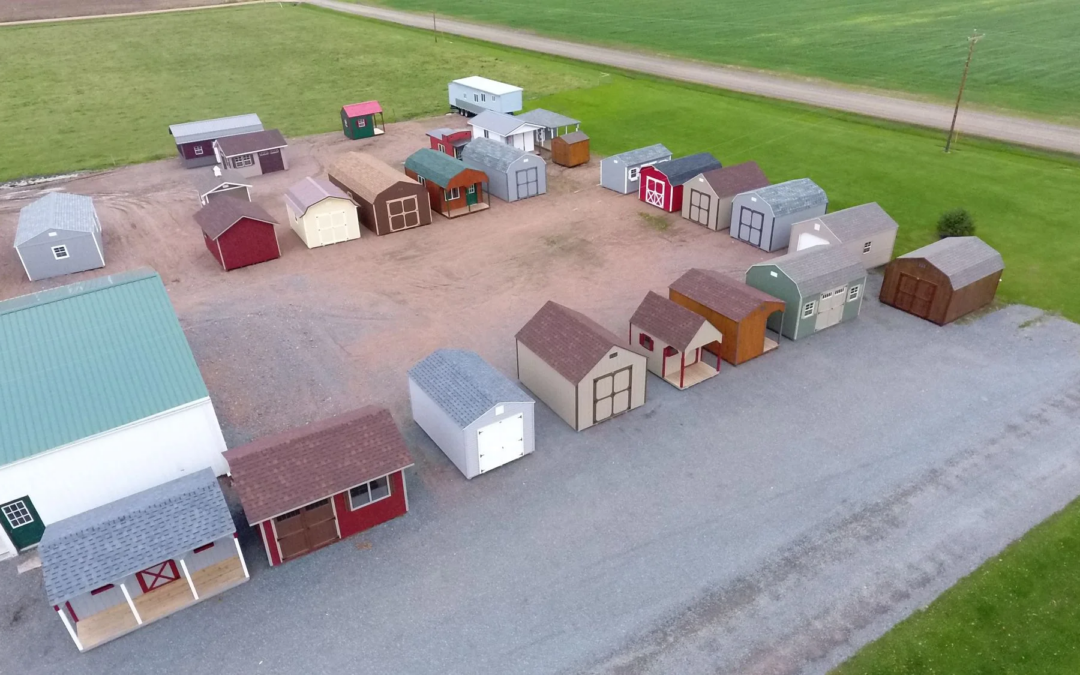
Sheds come in a vast range of shapes and styles. You can purchase small sheds for simple tool storage, all the way up to large structures like an A-frame shed with its classic steep roof and extra headroom for taller items.
Garden and tool sheds are the most familiar. Wooden garden sheds hold hoses, soil, seeds, and hand tools, so you’re not dragging everything out of the garage every time you plant something. Utility sheds and basic tool sheds focus on easy access to rakes, shovels, mowers, and everyday gear, with shelves and hooks for small items and open floor space for bigger pieces.
Workshop utility sheds can have a dedicated workspace for projects plus additional storage space. You can add workbenches, lighting, or power. Some large shed styles have the extra space you need to store things like lawn furniture and gardening equipment.
Cabin sheds and barn storage sheds are a step up in size and comfort. A cabin-style shed can work as a simple bunk room, project space, or hangout spot. Lofted barn storage sheds and larger garage sheds give you room for lawn equipment, bikes, and seasonal bins. Even after all of that, there’s still extra storage space up high or along the walls for things you don’t need every day.
People also get creative with how they use sheds. With some finishing work, a larger shed can serve as a small recording studio (just add a bit of soundproofing and finishing), a backyard fitness room, or a quiet home office. Some owners turn them into dog kennels or pool houses that hold pool furniture and toys. Some sheds are great for children’s playhouses with bright painted patterns and fun details.
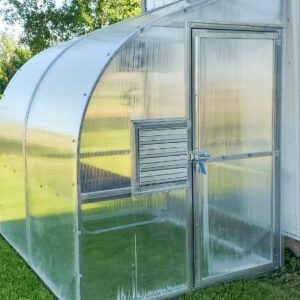
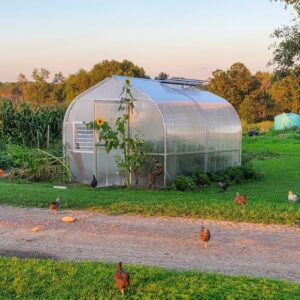
If you want a space for plants, cost-effective greenhouse sheds with glass or clear panels can trap heat and moisture for steadier growing conditions. Most sheds start with a similar frame, but the size you choose and the way you finish it changes everything, from how it looks to what it can realistically handle.
Main Components of Shed Construction
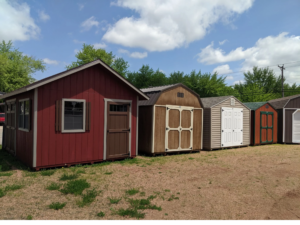
Siding protects the walls from wind, rain, dirt, insects, and sun. Many people choose wood siding so the building ties in with the trim on their home. If painting and staining sounds like a chore, vinyl is the low-maintenance route. You’ll also see builds that use engineered panels like oriented strand board (OSB). You only need a finish that helps it tie in with your home. If you want quality without paying everything at once, we offer rent-to-own sheds. You get the building you need in your yard now and pay over time instead of waiting while clutter piles up.
The roof matters a lot since it takes the brunt of snow and heavy rain. The right installation methods and high-quality materials help block water and stand up to months of snow, ice, and thaw cycles. Roof style also affects how the shed looks from the street and how naturally it fits with your home.
A strong floor keeps everything off damp ground. Many sheds arrive with treated joists and thick boards, sometimes paired with a plastic floor for easy cleanup. This matters when you park mowers or stack large quantities of boxes and bins.
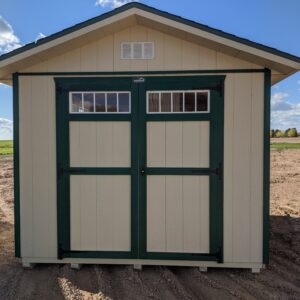
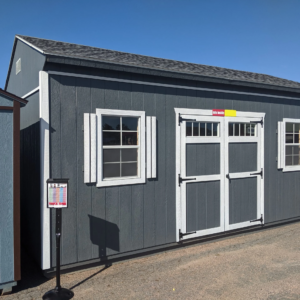
Doors and windows shape how the shed feels to use. Double doors make it simple to move lawn equipment and outdoor furniture in and out. Windows bring in light and fresh air, and details like grids or trim help the building match the house.
Accessories let you tune a shed to your life. Inside, shelves, hooks, and a small loft add storage and keep the floor clear. Outside, ramps, flower boxes, or small porches change both the look and how you walk into the building.
Key Considerations Before Buying or Building a Shed
Before you order a shed, get clear on how you plan to use it. If it’s mostly for boxes, bikes, and garden gear, a basic bicycle shed setup is fine. If you picture yourself working out there, you’ll care more about light, power, and staying warm or cool enough to be comfortable.
Take a slow walk around your yard and imagine a shed sitting in a few different spots. Look for ground that feels fairly level and does not stay soggy after rain. Avoid the corner where water always pools or where snow from the roof piles up. Leave a little breathing room along the sides so you can mow and do simple repairs.
Check how close you’re allowed to get to fences or property lines, and think about how you’ll roll a mower or wheelbarrow up to the doors without wrestling around tight corners. Try to picture the shed from the house so it fits the backyard instead of blocking views.
Materials and Durability for Sheds
Whatever you plan to do with your shed, what it’s made from has a big impact on how long it will last. Winters get cold, summers get humid, and storms can show up fast.
Most modern sheds are built from metal, plastic, or wood. Better-quality sheds use sturdier framing and siding that handle weather and daily use more reliably. Each one handles that mix of weather a little differently. Wood-framed sheds with solid floors and siding are common in the Midwest because they feel sturdy and look more like a small house than a kit, which even adds to the property’s market value sometimes.
Budget and Costs for Plastic Sheds, Metal Sheds, and Wooden Sheds
Budget is always part of the decision. Plastic shed kits might look cheap, but extra anchors and fixes can add up. Metal and wood sheds usually cost more than basic plastic kits, but they often bring more room and a longer usable life. Wooden sheds have a natural aesthetic that fits right into most yards, and they work well as potting sheds, bike sheds, or simple general storage.
Choosing a Shed That Actually Fits Your Life
At Sheds Delivered, we build and deliver sheds across Wisconsin, Minnesota, the Upper Peninsula of Michigan, and parts of Northern Illinois and Iowa. We can help you sort out size for more space, style, and layout so you’re not guessing.
We focus on portable sheds built for Midwest weather and delivered fully assembled, so you skip weeks of on-site building. When you’re ready for more room and less clutter, shop at Sheds Delivered and pick a shed that actually works for your life.